Reading a Riflescope Specification Sheet Without Getting Lost in Numbers
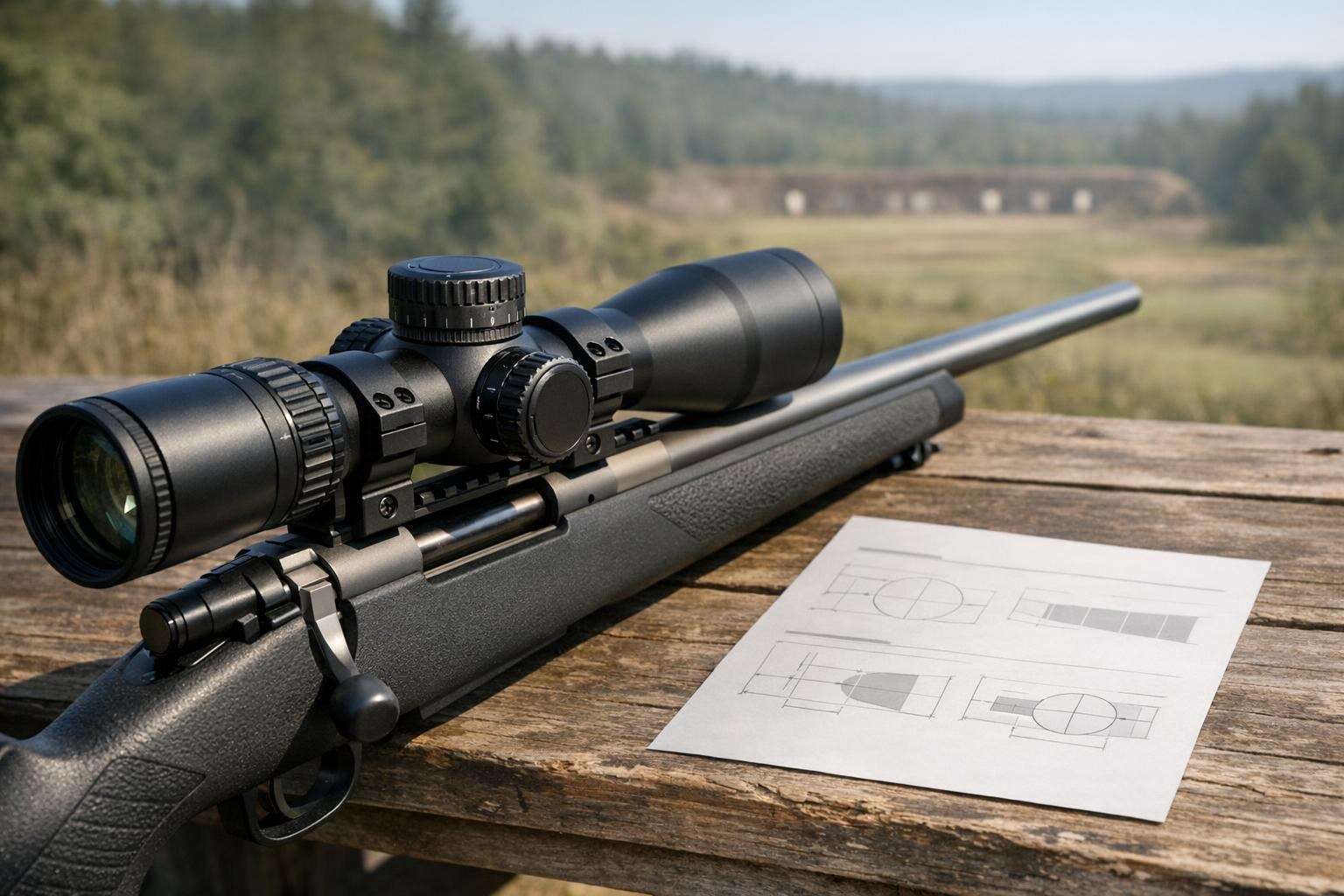
Don't let a spec sheet turn a wonderful product into a messy puzzle of conflicting numbers. Think of the various specifications for a riflescope in terms of how they relate to your use of the rifle and the demands of your hunts. How far do you shoot? How fast do you need to be able to acquire target(s)? How much light will be available? How much weight and space do you have to dedicate to your optics?
Start with the job, not the biggest number
Magnification is the first characteristic that is normally of interest to seekers of scopes. And, as with most things, it can be over-emphasized. A wide magnification band may be of interest to some, but a scope's top magnification is only of use if the image is of good quality, the FOV is reasonable and the scope can be held on target.
Low power is great for fast target identification and shooting moving game. Higher power is needed for precise identification of far off targets, and also for accurate shooting at long range. However, the image will appear to be of a smaller area, and small target movements will appear to be greater than at lower power. So the highest power setting is only useful for shooting at long range and only if the image is clear and the field of view is not too small to enable accurate target identification and shooting.
Don't make the mistake of treating the magnification range as a score. Rather, consider what settings you will actually use. Is a higher magnification setting important to you or will you mostly be using a lower setting?
Read objective lens size with mounting in mind
The objective is the front lens of the scope, which can be of varying diameter, potentially allowing more light in, but also increasing the overall size of the optic. However, the size of the front lens can increase the overall height of the optic, affecting the mounting height of the scope on the rifle, potentially requiring the use of higher mounting rings, to increase the cheek weld of the shooter.
In looking at the specification for the front of the scope, we must also keep in mind the specifications for the mounting. The mounting can be heighted or lowered on most rings, but once installed on a rifle it can't be moved. Therefore the overall height of the scope with the highest magnification objective in place must allow for a comfortable cheek weld and sufficient clearance for any other accessories that may be on the rifle.
Image brightness is not solely determined by the size of the front lens (objective lens). The quality of the glass, coatings, internal design, focusing, the atmosphere and the eye of the observer all play important roles in how bright and sharp an image is.
Field of view tells you how easy the scene is to find
The Field of View (FoV) is the width of the field that is visible through the scope. This is one of the most important features of a scope, especially for those who hunt in thick cover or have to follow rapidly moving game. A wide Field of View makes it much easier to locate game quickly and to follow fast moving targets.
More Field of View is better for finding animals, whereas less Field of View makes identification of far-away animals easier. Note that FoV changes with magnification, so always state the FoV for the magnification(s) for which you intend to use the scope. Never compare a scope's low power view to a scope's high power view – it just doesn't make sense.
Make sure the measurement is given in a unit that you understand. Also, find out whether the given measurement refers to the whole magnification range or not. If it only refers to one end of the range, then you still have to find out how the view will change at the other settings.
Eye relief is a comfort and safety check
When referring to Eye Relief, remember that even though a specification may look adequate, the actual relief required can vary greatly depending on the position in which you shoot from. It will also be affected by the mounting of your scope and the set up of your rifle.
When you look through your scope look for a clear, complete and focused image without any black shadowing or loss of image. If your scope has such characteristics they will greatly aid you in being able to shoot fast.
Remember that the specification for the eye relief must also take into account the stock of the rifle and its mounting as well as the recoil of the firearm. Although the eye relief may look to be of a suitable size it must be inspected and tested in the complete shooting position and treated with due respect if only marginally adequate.
Separate useful specifications from marketing noise
We must distinguish between useful information to decide on the basis of the specification and "additives" of marketing departments. First of all we have to look at tube diameter and the values for the total adjusting travel in millimeters and the numbers of turns for elevation and for azimuth. For the useful application we also need information on parallax, reticle location, scope controls and the design of focal planes.
Weight and length of the scope are generally listed at the bottom of the specification sheet. These figures tell you how the scope will balance with your rifle and how comfortably you can carry it. Note that a high feature optic can actually make a poor choice for a hunter who needs a complete setup that can be easily carried and mounted.
Look for missing information. We found many instances where a single value was given for one end of the scope's magnification range and none for the other. Be careful to note whether the field of view is given for the full zoom range. Also, are eye relief measurements given at all magnifications or just one? And are all adjustment values given in the same units? Are optical performance figures given with test methods to back up the claims?
Build a short comparison before buying
Start with your most important features and work your way down. For example:
– Most-used magnification setting
– Required field of view at that setting
– Most comfortable eye relief
– Most comfortable mounting position
– Heaviest weight still
– Most-used magnification setting
– Required field of view at that setting
– Comfortable eye relief and mounting position
– Acceptable weight and length
– Parallax and reticle features suited to the intended use
– Compatibility with available mounts and the rifle
Be sure to eliminate models early on that fail to meet practical considerations. The fact that one model may have an extremely wide range of magnification for example does not compensate for poor cheek weld. A large objective does not make up for a crappy reticle or other features which may not mount properly to your rifle.
The specs need to be checked. Many manufacturers use different measurement units, for different models or even for different versions of the same model. Verify the information in the manufacturer's documentation (also available online), check the mount's compatibility and try to have a look through the optic at a reputable dealer. The requirements for hunting equipment can vary from country to country and even change in the years to come. So always check the latest official regulations before heading out to the field with your new setup.
Don't confuse a bigger number with the better scope sheet. The best sheet is one that includes enough information to select the right scope for your application, i.e. your rifle, terrain, and how you will use the scope for observation.